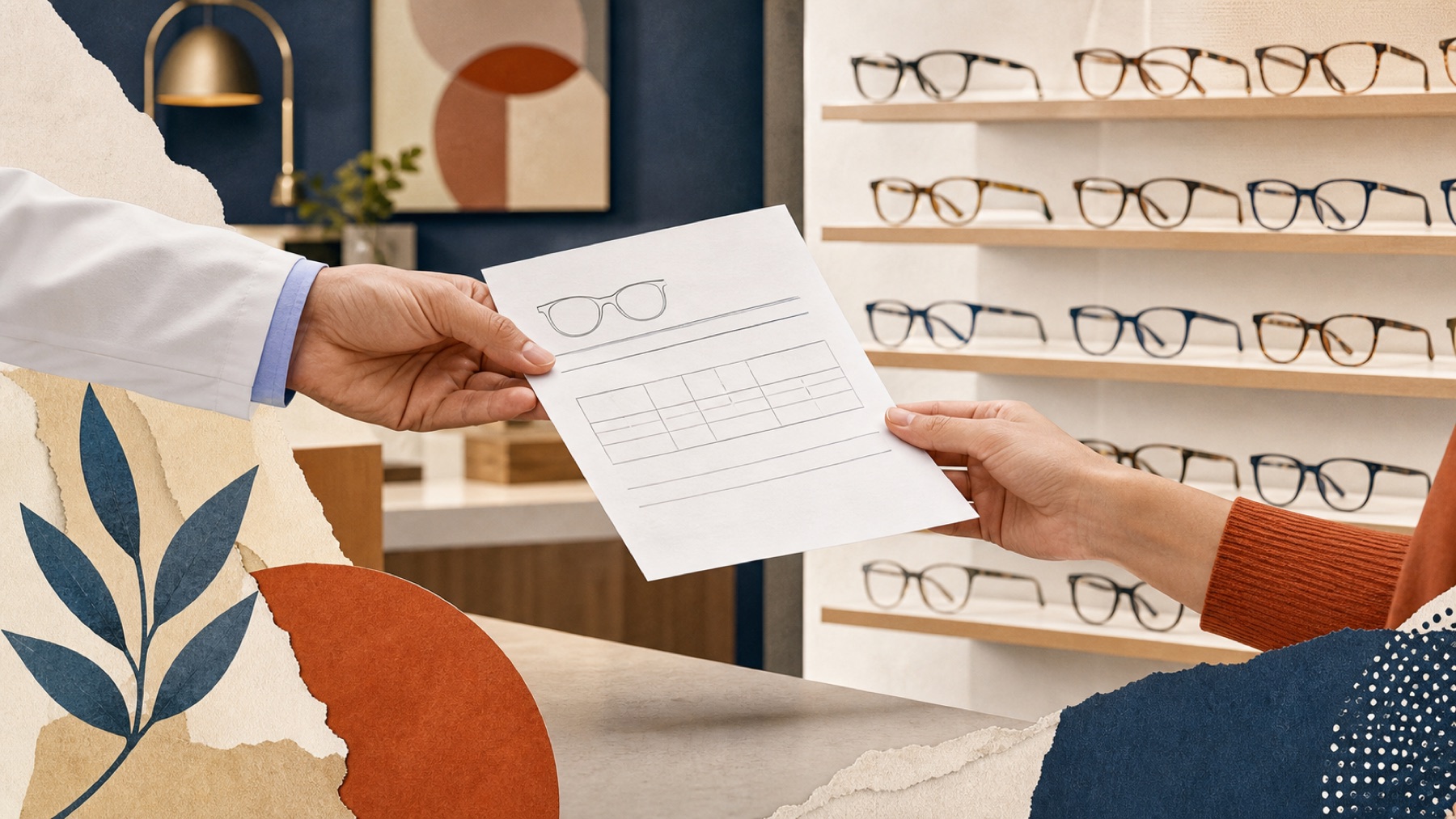
The Spill—in 30 seconds
- After an eye exam that includes a refraction, the prescriber generally must give you the glasses prescription automatically and at no extra charge.
- The prescription must be released before the prescriber or office offers to sell you eyeglasses.
- The federal rule does not always require pupillary distance, and it does not turn a refraction into a comprehensive eye-health exam.
The awkward retail pivot happens fast: the medical conversation ends, the frame wall lights up, and the prescription somehow becomes invisible.
Federal law is meant to break that lock-in. The Eyeglass Rule has required automatic prescription release for decades. The FTC strengthened the compliance trail in 2024 because, despite the longstanding rule, consumer complaints and surveys indicated that many patients still did not automatically receive their prescriptions.
What the Eyeglass Rule actually requires
For an eye exam that includes a refraction—the measurement that produces the numbers used in an eyeglass prescription—the prescriber generally must provide the prescription immediately after the exam and before offering to sell eyeglasses.
You may browse frames first. But once the prescriber or staff is ready and willing to make a sale, the prescription must already have been released. The office may provide paper, or digital delivery with your affirmative consent to that specific method. A digital copy must be accessible, downloadable and printable.
The rule covers ophthalmologists and optometrists, except those employed by a federal, state or local government entity. The 2024 update—published July 26, 2024 and effective September 24, 2024—generally requires prescribers with a direct or indirect financial interest in selling eyewear to request confirmation that the patient received the prescription and retain the record for at least three years. That receipt protects the compliance record; it is not a waiver of your right to shop elsewhere.
What the office cannot do
It cannot make prescription release conditional on buying glasses, charge a separate release fee, require a liability waiver, or refuse the refractive exam solely because you will not buy eyewear there.
The rule has real limits
The strongest headline needs the strongest caveat: the obligation follows a completed refraction that results in an appropriate eyeglass prescription. An eye-health examination that does not determine refraction does not create a prescription to release.
The American Academy of Ophthalmology reports that it confirmed with the FTC that the rule does not override an ophthalmologist’s medical judgment. If an ophthalmologist performs a diagnostic refraction but determines that issuing glasses is not medically appropriate—for example during certain cataract evaluations—the doctor is not forced to write a prescription. That exception is described in the Academy’s guidance rather than written into the rule text itself. The doctor should document the decision, and the office cannot use the withheld prescription as a setup for selling glasses anyway.
Payment rules are narrower than many people assume. A prescriber can generally require payment for the examination on the same terms applied to patients who do not need glasses. But the office cannot tack on a special fee simply to release the prescription. Proof that insurance covers the service can count as payment under the rule.
Why your prescription may still be missing pupillary distance
A prescription can be legally released and still lack the measurement an online eyeglass seller asks for: pupillary distance, or PD. The FTC says only a few states require prescribers to include PD, and some prescribers may charge to measure it.
That distinction is frustrating but important. The federal Eyeglass Rule governs the optical prescription derived from the refraction. State law often controls whether PD must be included. If the practice measured your PD but will not provide it, the FTC notes that access may be available under HIPAA or state medical-record rules.
Do not guess complex measurements for progressive lenses or unusual prescriptions. A low price is not a bargain if the optical centers, segment height or frame fit are wrong.
How to shop for glasses without shortchanging eye care
- Take a photo of the prescription and confirm the patient name, issue date, expiration date and lens powers are legible.
- Ask whether PD was measured and whether state law or the practice’s record policy gives you access.
- Compare the complete price: frame, lens material, coatings, progressive design, shipping, adjustments and remake policy.
- Check whether the seller will verify unclear values rather than silently filling an order.
- Use a qualified eye-care professional for pain, sudden vision change, flashes, floaters, injury or suspected disease—not a retail checkout.
- Keep regular comprehensive eye-health exams even if an online seller makes replacement glasses easy.
The right to shop is not an argument against ophthalmologists, optometrists or local opticians. It is an argument for separating medical judgment from retail pressure. A good practice can earn the eyewear sale after giving the patient genuine choice. Our life-insurance data guide explains a different consumer problem with the same practical lesson: know which records influence a commercial decision and how to correct them.
Frequently asked questions
Can an eye doctor refuse to give me my glasses prescription?
Generally not after a completed refraction that produces an appropriate eyeglass prescription. Exceptions can involve nonpayment on generally applicable terms or a documented medical determination that a prescription is not appropriate.
Must the office give me the prescription before showing frames?
You may browse frames first, but the FTC says the prescription must be released before the office offers to sell you eyeglasses.
Can the prescription be sent through a patient portal?
Yes, if you affirmatively consent to that specific digital-delivery method and the prescription is accessible, downloadable and printable. You retain the option of paper.
Is pupillary distance required on a glasses prescription?
Federal law generally does not require it. A few states do, and medical-record access rules may help if the measurement was taken. Requirements vary.
The exam may happen in one office. The frame purchase is still your decision.
Primary sources
- Federal Trade Commission, Buying Prescription Glasses or Contact Lenses: Your Rights, accessed September 7, 2026.
- Federal Trade Commission, Final Eyeglass Rule update announcement, June 27, 2024.
- Electronic Code of Federal Regulations, 16 CFR Part 456—Ophthalmic Practice Rules, accessed September 7, 2026.
- American Academy of Ophthalmology, You Must Confirm Release of Eyeglass Prescription.