Jump to a section
What changedQuick project guideWhat may still qualifyCheck your stateFederal tax creditQuote checklistFAQThe Spill—in 30 seconds
- New HEEHR reservations for projects classified as replacing non-electric HVAC or appliances with electric equipment no longer fit DOE’s revised strategy.
- Previously approved reservations, electric-to-electric upgrades, eligible new construction, certain add-on projects, and HOMES require separate analysis.
- State administrators control timing, classification, procedures, and documentation—but cannot override the federal condition.
The most expensive number in an HVAC quote may be the rebate that is no longer available for that project.
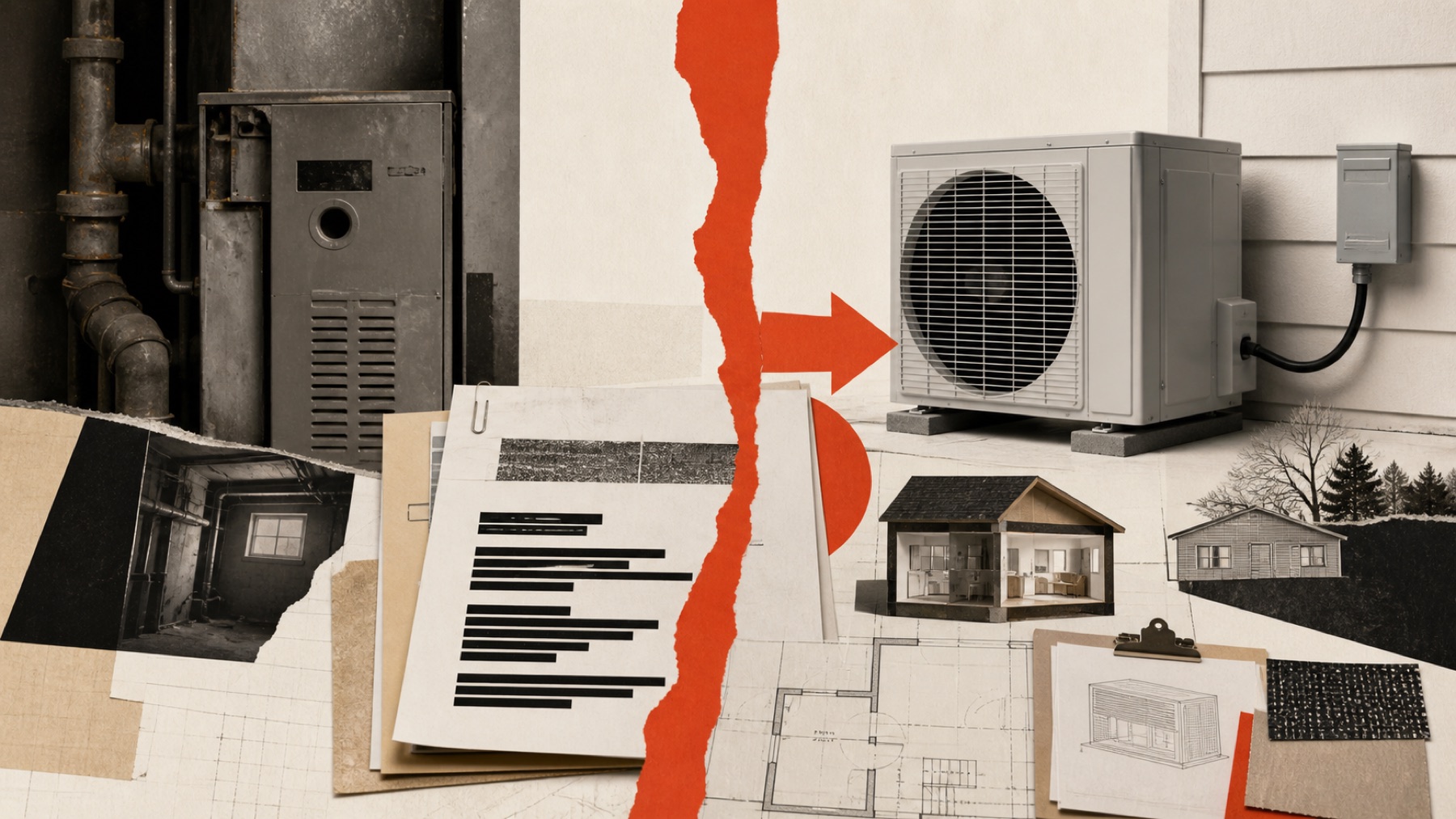
On May 29, 2026, the U.S. Department of Energy issued Program Notice 26-2 for the High-Efficiency Electric Home Rebate program, or HEEHR. It removes the earlier “fuel switching” allowance—defined here as replacing non-electric appliances—and directs HVAC and appliance retrofits toward electric-to-more-efficient-electric upgrades.
Older federal and state materials may call this program HEAR, HEEHRA, or the Home Electrification and Appliance Rebates program. DOE’s current name is the High-Efficiency Electric Home Rebate program, or HEEHR.
For an income-qualified homeowner, the change can alter the economics of replacing a gas furnace, oil boiler, propane water heater, or gas range with electric equipment. It does not mean every home-energy rebate disappeared.
What changed for HEEHR heat-pump and appliance rebates?
The controlling federal distinction is the equipment already in the home.
If a proposed retrofit is classified as replacement of non-electric HVAC or an appliance with electric equipment, a new HEEHR reservation does not conform to the revised federal strategy and cannot be approved. If the project replaces existing electric equipment with more efficient electric equipment, it remains within the federal strategy, subject to every other program rule.
States decide whether a program is open, classify equipment and scope, set procedures and documentation, and may narrow access. They cannot approve a new reservation that conflicts with Program Notice 26-2.
DOE directed launched programs to conform within three months of the May 29, 2026 notice unless DOE approved more time for extenuating circumstances. That federal deadline fell on August 29, 2026. As of September 7, most launched programs should be operating under the revised strategy, but transition procedures differed and extensions may exist. Confirm the current rule with your state administrator. Previously approved reservations may still be executed; an estimate, application, or verbal assurance is not necessarily an approval. These requirements appear on page 3 of the notice.
DOE issued separate notices for the HOMES program and Tribal HEEHR program on the same date. Program Notice 26-2 governs state and territory HEEHR programs; it should not be treated as a universal rule for every home-energy incentive.
Quick project guide
| Project situation | Federal HEEHR position | What to verify |
|---|---|---|
| Replace non-electric HVAC or an appliance with electric equipment | A new reservation does not conform to the revised fuel-switching strategy. | Exact classification, transition procedure, and whether an approved reservation already exists. |
| Replace existing electric equipment with more efficient electric equipment | Remains within the revised strategy. | Product, income, cost, contractor, sequencing, funding, and state rules. |
| Install eligible electric HVAC or appliances in new construction | Remains allowable under the notice. | Whether the local program serves new construction and all requirements are met. |
| Add a heat pump while retaining fossil-fuel HVAC | The notice permits retention of the fossil system, even if the heat pump is not primary. | Whether the state classifies and approves the specific add-on project; permission is not approval. |
| Use a previously approved reservation | An existing approved reservation under prior guidance may be executed. | Approval is valid, funded, and tied to the unchanged project—not merely quoted or submitted. |
| Seek a HOMES rebate | Not changed by Program Notice 26-2. | Local availability and modeled or measured savings, income, project, and documentation rules. |
Important: This table summarizes federal guidance. It is not a state approval, funding promise, or eligibility determination.
What may still qualify?
Electric-to-electric upgrades and eligible new construction
Electric-to-more-efficient-electric replacements and eligible electric equipment in new construction remain within the strategy. Neither guarantees a rebate: the state program must be open, funded, and satisfied on all other requirements.
Add-on heat pumps that retain fossil-fuel HVAC
Program Notice 26-2 permits a dwelling to retain existing fossil-fuel HVAC when installing a heat pump, even if the heat pump will not be the primary heating and cooling source. This allowance appears on page 5 of the notice.
That allowance is not approval. A full replacement and a project retaining the existing system may be classified differently; the state must still approve the exact project under federal and local rules.
Insulation and air sealing may come first
Under the revised strategy, homes must use HEEHR rebates for insulation and air sealing before heating and cooling upgrades, unless the dwelling already meets a DOE-approved, state-specified level. That does not mean every home must install new insulation. Ask what assessment and documentation the state requires.
HOMES is separate from HEEHR
HEEHR and HOMES are different programs. HEEHR covers specific measures; HOMES rewards qualifying whole-home projects based on modeled or measured savings. Losing one HEEHR pathway does not establish HOMES eligibility.
Program Notice 26-2 applies only to HEEHR. DOE’s federal overview and ENERGY STAR’s HOMES guidance describe HOMES separately; DOE identifies a minimum 20% modeled-savings threshold.
What this means for you
Investigate HOMES; do not assume it will replace HEEHR. Local savings results, income, funding, and documentation govern.
How to check HEEHR eligibility in your state
Start with the state or territory program page. If sources conflict, wait for the responsible administrator to resolve the conflict in writing.
- Is HEEHR open and funded in my ZIP code?
- What transition date and procedure apply after Program Notice 26-2?
- How is my existing equipment and proposed project classified?
- Do I need insulation or air sealing first?
- Must I obtain a reservation before a deposit, purchase, installation, or inspection?
- Is HOMES available, and what modeled or measured savings pathway applies?
- Which costs and contractors are eligible, and what records must I retain?
Save the written answer, current program manual, reservation number, income determination, and matching quote version. A verbal “you should qualify” is not financing.
Is there still a federal heat-pump tax credit in 2026?
Section 25C is not a fallback for 2026 installations. The IRS says it applied to qualifying improvements made through December 31, 2025; 26 U.S.C. § 25C likewise bars the credit for property placed in service after that date. A tax-year-2025 return filed in 2026 may cover a qualifying 2025 installation, but a 2026 quote should not count the expired benefit. Our window-credit guide explains the same placed-in-service distinction for replacement windows.
State, utility, municipal, and manufacturer incentives may follow different rules. Verify funding, deadlines, eligible costs, and stacking limits. Federal law bars combining a HEEHR rebate with another federal grant or rebate—including a HOMES rebate—for the same qualified electrification project; 42 U.S.C. § 18795a(c)(8) controls that rule.
HVAC quote checklist: verify the rebate before signing
Compare the no-rebate price first. Then add only incentives confirmed by the administrator.
- Equipment, labor, permits, electrical work, and envelope work
- Base price separated from every rebate, credit, or discount
- The administrator and program behind each incentive
- Existing fuel and equipment assumptions
- Reservation or preapproval deadlines
- Deposit refund terms if the rebate is denied or reduced
Frequently asked questions
Did DOE cancel all home-energy rebates in 2026?
No. Program Notice 26-2 changes HEEHR for state and territory programs. It does not cancel HOMES or every state, utility, municipal, or manufacturer incentive. Other HEEHR pathways remain, subject to federal and local rules and funding.
Can I still get HEEHR to replace a gas furnace with a heat pump?
A new reservation for a project classified as replacing non-electric HVAC with electric equipment does not conform to DOE’s revised strategy. An existing approved reservation may proceed. A project that retains the fossil system requires separate classification and approval; ask the administrator in writing.
Is HOMES an automatic alternative if HEEHR is denied?
No. HOMES is separate and may be worth checking, but the local project must independently satisfy modeled or measured savings and all other program requirements.
Do I need insulation and air sealing first?
Under the revised HEEHR strategy, applicable rebates for insulation and air sealing must be used before heating and cooling upgrades unless the dwelling already meets a DOE-approved, state-specified level. Ask how the state documents compliance.
Home System Protection Check
We are evaluating a tool for organizing likely rebate pathways, HVAC and electrical quotes, and home-warranty options. It would not guarantee eligibility, funding, savings, coverage, claims, contractor availability, workmanship, or quality.
Warranty and service-contract rules and terms vary by state and product. Read the contract and consult the applicable regulator. A service contract does not replace homeowners insurance.
Updates forthcoming.
No product or referral destination is live. Any future affiliate or referral relationship will be disclosed clearly before any click or information submission.
DOE changed the rule. Your move is to identify the exact program, classify the equipment already in the home, and refuse to spend a rebate that has not been approved.
Primary sources
- U.S. Department of Energy, Home Energy Rebates Program Notice 26-2, effective May 29, 2026.
- U.S. Department of Energy, Home Energy Rebates Program, accessed September 7, 2026.
- ENERGY STAR, Home Efficiency Rebates (HOMES) Program, accessed September 7, 2026.
- GovInfo, 42 U.S.C. § 18795a, accessed September 7, 2026.
- Legal Information Institute, 26 U.S.C. § 25C, accessed September 7, 2026.
- Internal Revenue Service, Energy Efficient Home Improvement Credit, accessed September 7, 2026.
- California Department of Insurance, Home Protection Contracts, accessed September 7, 2026. California-specific example; regulation and terminology vary by state.